I help companies build products with LLMs and share what I learn along the way. I write about topics like evals, fine-tuning, and infrastructure for LLMs. I have over 25 years of industry experience with Machine Learning which informs my pragmatic approach to solving problems.
New Blog Post: An Open Course on LLMs, Led by Practitioners
|
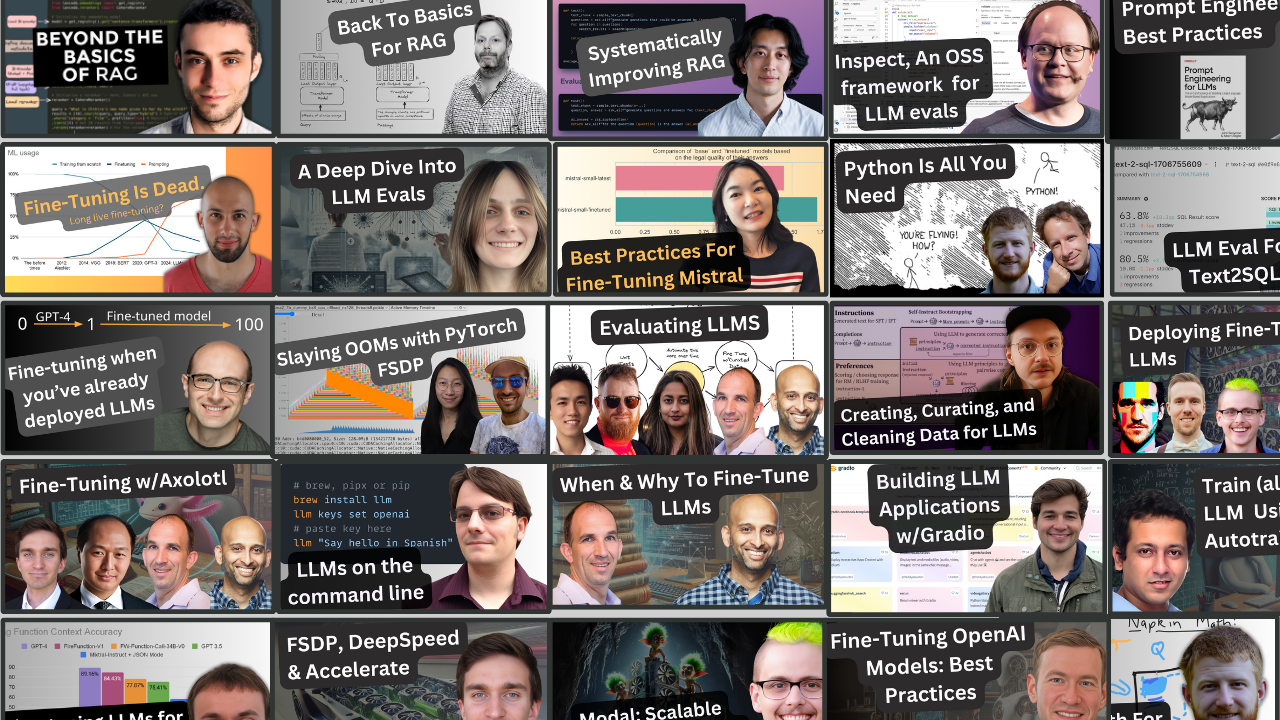
Hello folks! Wanted to share a new blog post with ya'll. Below are the details: An Open Course on LLMs, Led by PractitionersPublished on July 29, 2024 Today, we are releasing Mastering LLMs, a set of workshops and talks from practitioners on topics like evals, retrieval-augmented-generation (RAG), fine-tuning and more. This course is unique because it is:
We have organized and annotated the talks from our popular paid course.1 This is a survey course for technical ICs (including engineers and data scientists) who have some experience with LLMs and need guidance on how to improve AI products.
Speakers include Jeremy Howard, Sophia Yang, Simon Willison, JJ Allaire, Wing Lian, Mark Saroufim, Jane Xu, Jason Liu, Emmanuel Ameisen, Hailey Schoelkopf, Johno Whitaker, Zach Mueller, John Berryman, Ben Clavié, Abhishek Thakur, Kyle Corbitt, Ankur Goyal, Freddy Boulton, Jo Bergum, Eugene Yan, Shreya Shankar, Charles Frye, Hamel Husain, Dan Becker and more Getting The Most Value From The CoursePrerequisitesThe course assumes basic familiarity with LLMs. If you do not have any experience, we recommend watching A Hacker’s Guide to LLMs. We also recommend the tutorial Instruction Tuning llama2 if you are interested in fine-tuning 2. Navigating The MaterialThe course has over 40 hours of content. To help you navigate this, we provide:
To get started, navigate to this page and explore topics that interest you. Feel free to skip sections that aren’t relevant to you. We’ve organized the talks within each subject to enhance your learning experience. Be sure to review the chapter summaries, notes, and resources, which are designed to help you focus on the most relevant content and dive deeper when needed. This is a survey course, which means we focus on introducing topics rather than diving deeply into code. To solidify your understanding, we recommend applying what you learn to a personal project. Footnotes
|
Hamel Husain
I help companies build products with LLMs and share what I learn along the way. I write about topics like evals, fine-tuning, and infrastructure for LLMs. I have over 25 years of industry experience with Machine Learning which informs my pragmatic approach to solving problems.
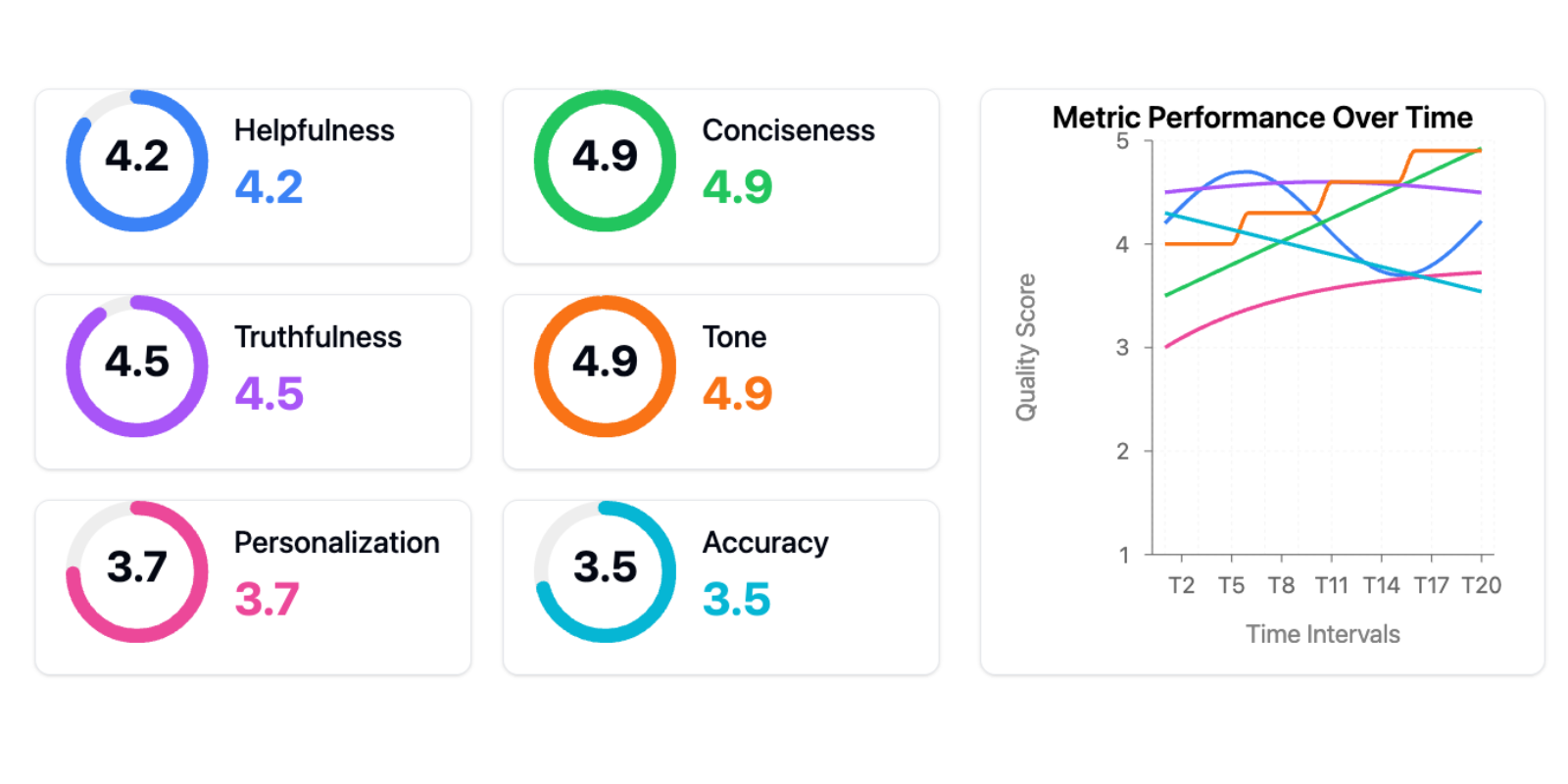
Hello folks! Over the last 2 years, I've helped 35+ companies improve their AI products. I distilled my approach into this guide, which covers error analysis, synthetic data, eval-human alignment, involving domain experts, optimizing # of experiments & more I appreciate you receiving this, but if you want to stop, simply unsubscribe • • • Read in browser for best experience 👉(web version has extras like videos, images, tables and more) 👈 A Field Guide to Rapidly Improving AI Products...
Thoughts On A Month With Devin Impressions of Devin after giving it 20+ tasks. In March 2024, a new AI company burst onto the scene with impressive backing: a $21 million Series A led by Founders Fund, with support from industry leaders including the Collison brothers, Elad Gil, and other tech luminaries. The team behind it? IOI gold medalists - the kind of people that solve programming problems most of us can’t even understand. Their product, Devin, promised to be a fully autonomous software...
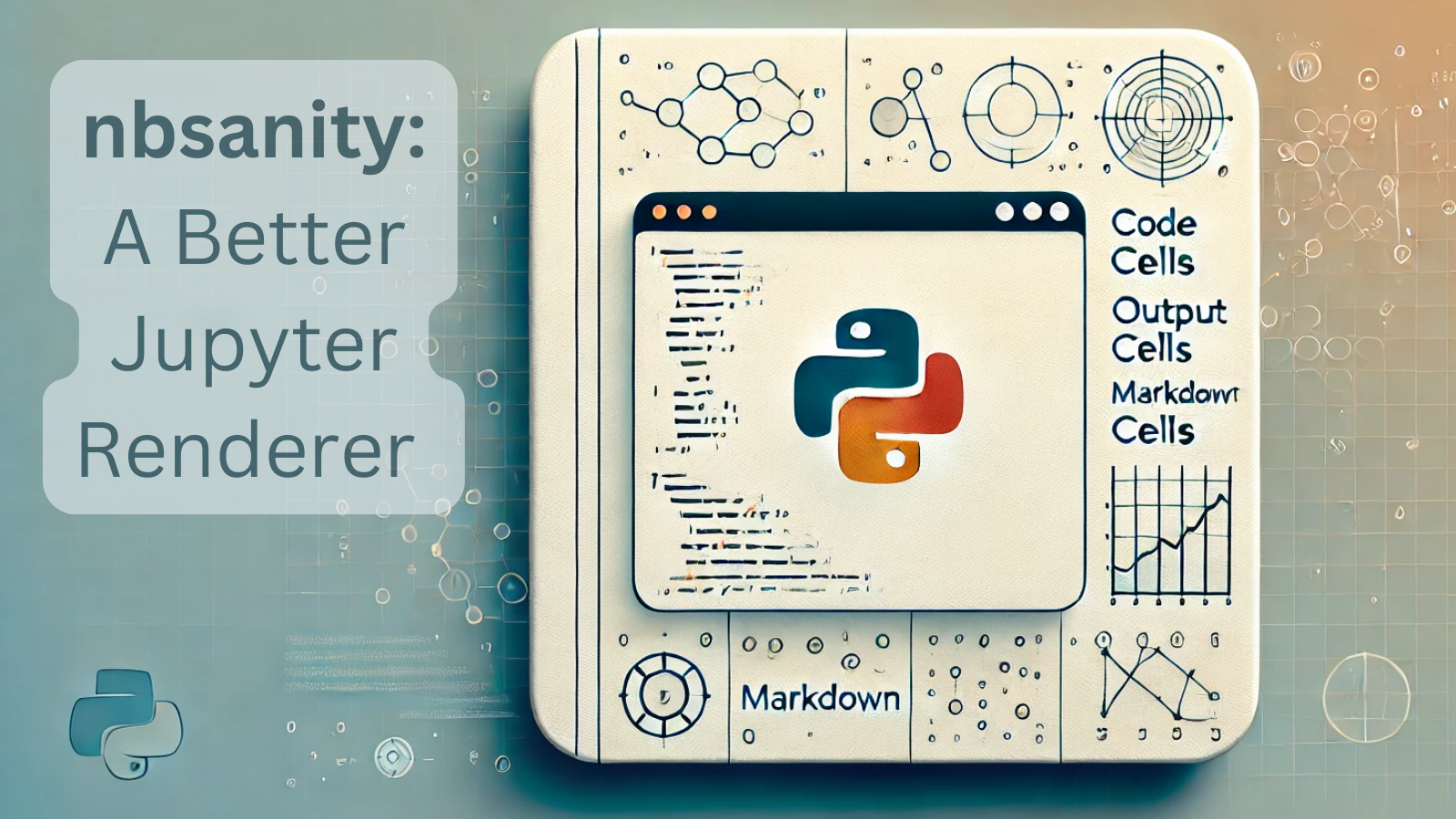
nbsanity - Share Notebooks as Polished Web Pages in Seconds Transform your GitHub Jupyter notebooks into beautiful, readable web pages with a single URL change. No setup required. I’ve long believed that Jupyter Notebooks are an excellent medium for technical writing, combining live code, visualizations, and narrative text in a single document. However, sharing notebooks in a way that’s both beautiful and accessible has always been a challenge. While GitHub’s notebook viewer is functional, it...