I help companies build products with LLMs and share what I learn along the way. I write about topics like evals, fine-tuning, and infrastructure for LLMs. I have over 25 years of industry experience with Machine Learning which informs my pragmatic approach to solving problems.
New Blog Post: Creating a LLM-as-a-Judge That Drives Business Results
|
Hello folks! Wanted to share a new blog post with ya'll. Here is a preview of the post - clink the link below for the full version. Creating a LLM-as-a-Judge That Drives Business ResultsPublished on October 29, 2024 Earlier this year, I wrote Your AI product needs evals. Many of you asked, “How do I get started with LLM-as-a-judge?” This guide shares what I’ve learned after helping over 30 companies set up their evaluation systems. The Problem: AI Teams Are Drowning in DataEver spend weeks building an AI system, only to realize you have no idea if it’s actually working? You’re not alone. I’ve noticed teams repeat the same mistakes when using LLMs to evaluate AI outputs:
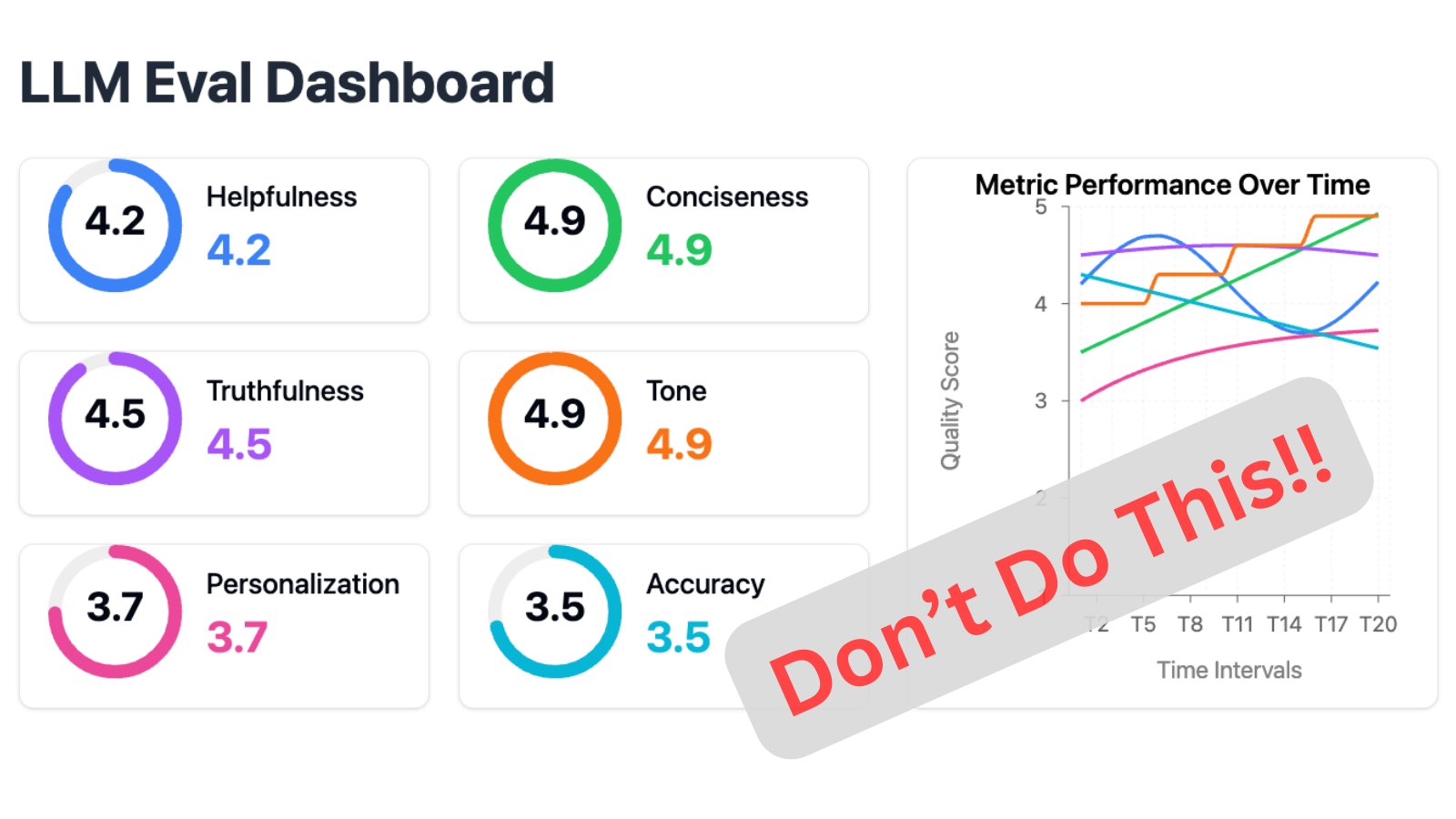
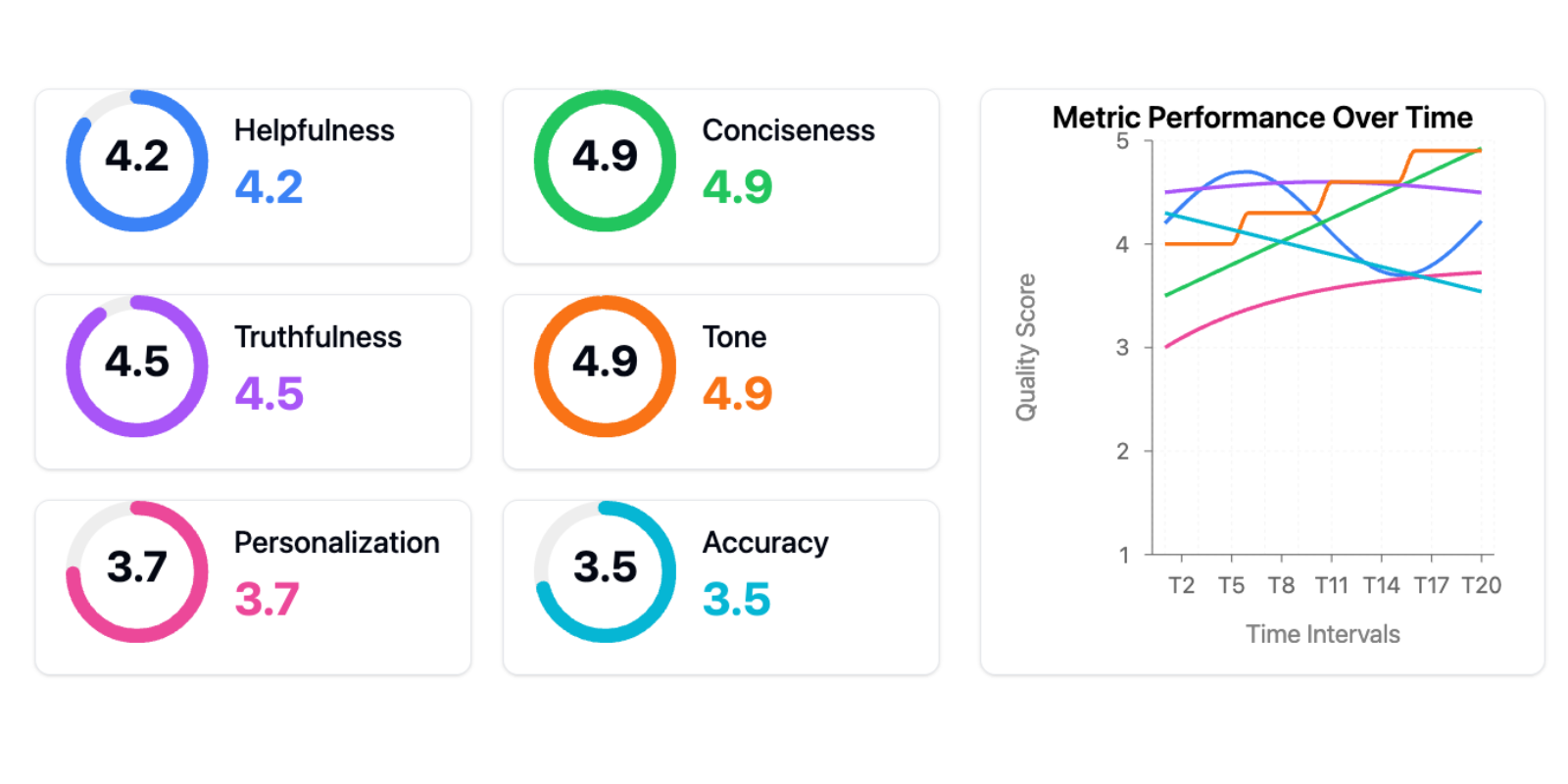
The result? Teams end up buried under mountains of metrics or data they don’t trust and can’t use. Progress grinds to a halt. Everyone gets frustrated. For example, it’s not uncommon for me to see dashboards that look like this:
Tracking a bunch of scores on a 1-5 scale is often a sign of a bad eval process (I’ll discuss why later). In this post, I’ll show you how to avoid these pitfalls. The solution is to use a technique that I call “Critique Shadowing”. Here’s how to do it, step by step.
|
Hamel Husain
I help companies build products with LLMs and share what I learn along the way. I write about topics like evals, fine-tuning, and infrastructure for LLMs. I have over 25 years of industry experience with Machine Learning which informs my pragmatic approach to solving problems.
Hello folks! Over the last 2 years, I've helped 35+ companies improve their AI products. I distilled my approach into this guide, which covers error analysis, synthetic data, eval-human alignment, involving domain experts, optimizing # of experiments & more I appreciate you receiving this, but if you want to stop, simply unsubscribe • • • Read in browser for best experience 👉(web version has extras like videos, images, tables and more) 👈 A Field Guide to Rapidly Improving AI Products...
Thoughts On A Month With Devin Impressions of Devin after giving it 20+ tasks. In March 2024, a new AI company burst onto the scene with impressive backing: a $21 million Series A led by Founders Fund, with support from industry leaders including the Collison brothers, Elad Gil, and other tech luminaries. The team behind it? IOI gold medalists - the kind of people that solve programming problems most of us can’t even understand. Their product, Devin, promised to be a fully autonomous software...
nbsanity - Share Notebooks as Polished Web Pages in Seconds Transform your GitHub Jupyter notebooks into beautiful, readable web pages with a single URL change. No setup required. I’ve long believed that Jupyter Notebooks are an excellent medium for technical writing, combining live code, visualizations, and narrative text in a single document. However, sharing notebooks in a way that’s both beautiful and accessible has always been a challenge. While GitHub’s notebook viewer is functional, it...